

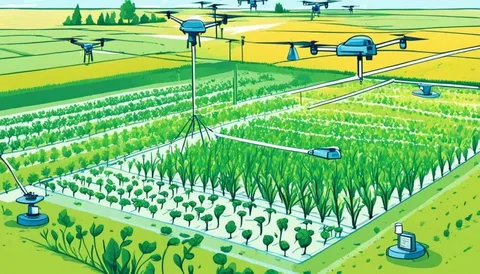
Precision agriculture is transforming the way farmers approach crop production and land management. By harnessing the power of Artificial Intelligence (AI) and Machine Learning (ML), farmers can optimize their farming practices to improve yields, reduce costs, and make smarter decisions. In this article, we will explore the profound impact of AI and machine learning in precision agriculture, the technologies driving these changes, and the future implications for sustainable farming.
What is Precision Agriculture?
Precision agriculture refers to the use of advanced technologies to monitor and manage field variability in crops. The goal is to maximize the efficiency and sustainability of farming practices by applying the right amount of resources (water, fertilizers, pesticides, etc.) at the right time and in the right location.
AI and ML play crucial roles in this revolution by enabling better data collection, analysis, and decision-making. These technologies provide farmers with actionable insights, which help them manage their operations more efficiently and reduce environmental impact.
How AI and Machine Learning Are Transforming Precision Agriculture
1. Improved Crop Monitoring and Yield Prediction
One of the primary applications of AI and machine learning in precision agriculture is crop monitoring. AI-powered drones, satellites, and sensors collect data on various factors like soil moisture, temperature, crop health, and more. This data is then analyzed using machine learning algorithms to predict crop yields, detect early signs of disease or pest infestations, and monitor the overall health of the crops.
AI and machine learning also enhance yield prediction models, allowing farmers to make more accurate forecasts. These insights enable farmers to adjust their strategies in real time, ensuring optimal harvest times and reducing losses.
2. Optimized Resource Management
Traditionally, farmers apply water, fertilizers, and pesticides uniformly across entire fields. However, with precision agriculture, AI and ML algorithms help to identify areas of the field that require more or less of these resources. By using sensors and imaging technology, AI can pinpoint which parts of the field are underperforming and need intervention.
This targeted approach reduces waste, improves resource efficiency, and lowers costs. For example, AI can recommend the precise amount of water needed for different parts of a field, reducing water usage and conserving this precious resource.
3. Predictive Analytics for Better Decision Making
AI and machine learning allow farmers to move beyond traditional decision-making methods based on historical knowledge. With the help of AI algorithms, farmers can predict future outcomes, such as crop growth patterns, weather conditions, and market demand. These predictive models allow farmers to make proactive decisions, such as adjusting planting schedules, choosing the best crop varieties, or even determining the optimal time for harvesting.
Machine learning continuously improves these predictions by learning from vast datasets of historical and real-time data, providing farmers with increasingly accurate and actionable insights.
Benefits of AI and Machine Learning in Precision Agriculture
1. Increased Productivity and Efficiency
AI and machine learning in precision agriculture help farmers boost their productivity by identifying inefficiencies and suggesting solutions. For example, by accurately identifying areas that require more nutrients or water, AI ensures that resources are used efficiently, leading to healthier crops and higher yields.
2. Reduced Environmental Impact
AI-driven precision farming practices help reduce the environmental footprint of agriculture. By using AI to optimize fertilizer application and water usage, farmers can minimize the use of harmful chemicals and conserve natural resources. This leads to reduced pollution and a more sustainable farming model, which is critical as the world faces climate change and growing population demands.
3. Cost Savings
One of the most significant benefits of AI and machine learning in precision agriculture is cost reduction. By improving resource management and crop monitoring, farmers can lower operational costs, such as those associated with water, labor, and chemicals. The ability to predict crop yields and adjust inputs accordingly also ensures that farmers are not over-spending on resources that may not be needed.
The Future of AI and Machine Learning in Precision Agriculture
The integration of AI and machine learning in precision agriculture is still in its early stages, but the potential for growth is immense. In the future, we can expect even more advanced applications, such as fully autonomous tractors, real-time disease detection systems, and AI-driven decision-support tools that can analyze large amounts of agricultural data from various sources.
As AI technologies continue to evolve, they will play a pivotal role in shaping the future of agriculture, making farming more sustainable, efficient, and productive.
Conclusion: The Long-Term Impact of AI and Machine Learning in Precision Agriculture
Exploring the impact of AI and machine learning in precision agriculture reveals the incredible potential these technologies have to revolutionize farming practices. From improving crop yields to optimizing resource management and reducing environmental impact, AI and machine learning are paving the way for smarter, more efficient, and sustainable farming methods. As technology continues to advance, the future of agriculture looks brighter, more efficient, and more sustainable than ever before.
