

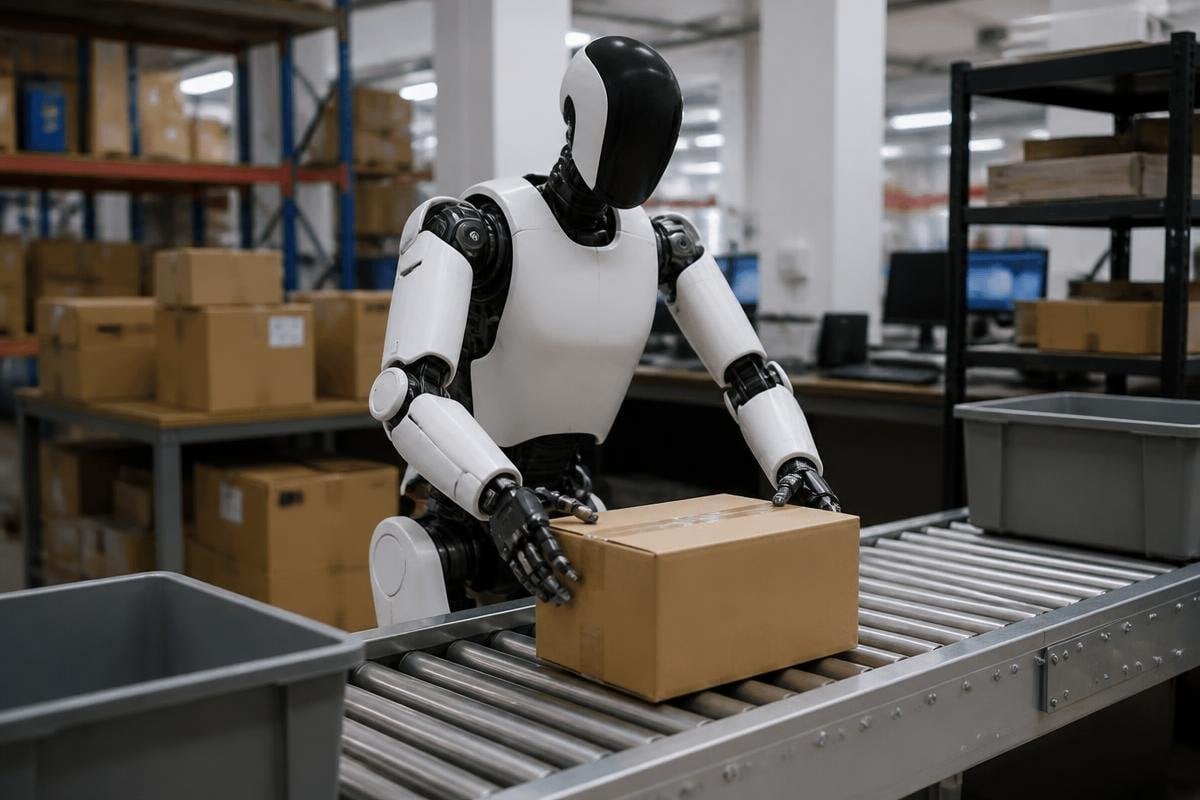
A robot with a human shape can enter spaces built for people, use familiar tools, and communicate through gestures. It can also add cost, fragile parts, and false expectations when its face and hands suggest abilities the hardware doesn’t have.
- Human shape helps when the robot must use human tools or spaces
- A face can show attention without proving understanding
- The job should decide the body, not a product image
Start with the work
The first design question is physical: what must the robot do? A machine sorting parcels needs reach, grip strength, safe motion, and a way to move around people. For those tasks, a human face does little.
That body shape makes more sense when the robot must climb stairs, open doors, turn handles, or use equipment made for a person. Those tasks already assume a certain hand height, arm reach, foot position, and body width. Matching that layout can reduce changes to the building and tools.
The trade is clear. A human-shaped robot carries joints, motors, sensors, and control software in places that copy the human body. A wheeled base with a single arm may do the same work with fewer moving parts. The simpler body deserves the first look.
What a face tells people
People read faces quickly. A head that turns toward a speaker can show where the robot is directing its sensors. A pair of eyes can make the robot easier to address in a room with several people.
That signal has a limit. A face can show where the robot is looking, but it can’t prove that the robot understands the speaker. It may also make a delay, error, or scripted reply feel more like a social failure than a machine fault.
This matters in care, education, and public service. People may speak to a human-looking robot as if it can remember private details, judge a situation, or offer comfort.
Designers need to show the machine’s limits through its voice, screen, movements, and clear labels.
A human face can make a robot seem more aware than its sensors allow. Reports at Robot24.com can tie that design choice to named machines, test results, and user responses before the next section counts the added hardware and design work.
The cost of copying people
The human hand has many ways to hold an object. A robot hand needs sensors, motors, control code, and enough strength for each grip. That makes the hand harder to build and maintain than a tool made for one task.
Legs modeled on people help on stairs and uneven floors, but they need careful balance control. A wheeled robot may move faster on a flat floor and carry more weight with fewer parts to service.
The face has its own cost. Moving eyelids, lips, or skin adds motors and points of failure. A fixed screen or light can give the same basic status signal with less hardware. The right choice depends on the people nearby and the message the robot must send.
I’d choose the least human design that completes the job safely and clearly.
Design the message with the body
A robot’s appearance changes how people use it. A small machine may invite close contact. A tall machine may make people step back. Hands, eyes, lights, sound, and speed all shape that response before the robot performs a task.
Designers can make the machine easier to read without copying a person. A clear display can say “charging” or “waiting for help.” A light can show that a sensor is active. A spoken prompt can tell someone where to stand and what the robot will do next.
The best design gives people the right expectation. The human form says, “I can work in your space.” It should never silently suggest, “I think like you.”
A practical design check
Use this checklist before approving a human-looking robot:
- Map the task: list the tools, doors, surfaces, and objects the robot must handle
- Compare bodies: price the human-shaped version against wheels, tracks, or a fixed arm
- Mark the limits: show what the robot can sense, remember, and decide
- Test first contact: watch how people approach, speak to, and move around it
- Count service points: include joints, motors, covers, cameras, and hand parts that need repair
- Set the signal: decide what lights, sounds, screens, and gestures mean
This check keeps appearance tied to use. It also gives the buyer a way to ask for proof before paying for a face, fingers, or walking legs.
The next design review should begin with a floor plan, a tool list, and the robot’s failure cases. If the human shape solves none of those, leave the face off.
